

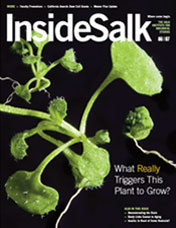



Salk team reveals never-before-seen antibody binding, informing both liver cancer and antibody design
Some molecules are so elusive that scientists require a unique set of tools to capture their structure. That’s precisely how a multi-institutional research team led by Salk scientist Tony Hunter and Salk postdoctoral fellow Rajasree Kalagiri, featured in this issue’s “Next Gen,” defined how antibodies recognize a compound called phosphohistidine—an unstable molecule that’s implicated in certain cancers, such as liver and breast cancer and neuroblastoma. These insights could help researchers understand the molecule’s role in cancer pathways and also enable the design of more efficient antibodies in the future.
Featured Stories
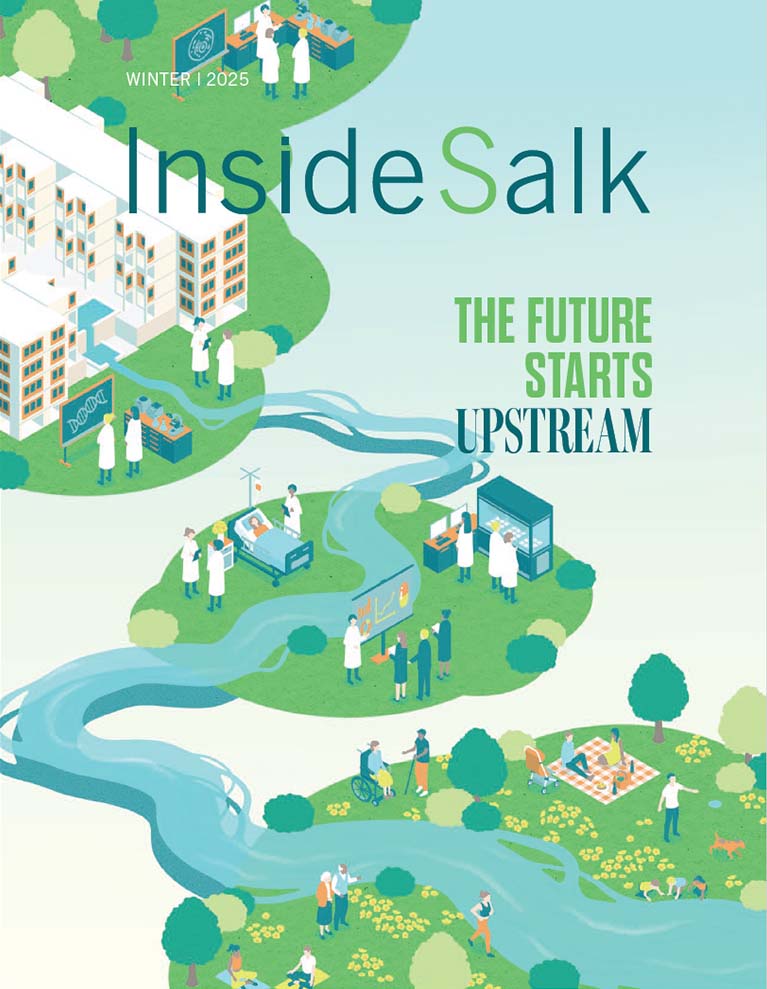
 The future starts upstreamFoundational discoveries are the source of tomorrow’s breakthroughs, but what happens if we let the river run dry?
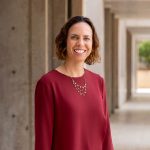 Diana Hargreaves: Follow the ScienceThe BAF complex is near and dear to Diana Hargreaves, PhD, a scientist, professor, and the J.W. Kieckhefer Foundation Chair at Salk. Hargreaves was born in Atlanta, Georgia, to a physician-scientist mother, so science had a hold on her from the very beginning.
 Ana Cabrera: Clearing the Path to DiscoveryCabrera is the senior director of strategic operations at Salk, a right-hand role to Chief Science Officer (CSO) Jan Karlseder, PhD. Cabrera and her colleagues in the CSO’s Office support Salk scientists through all of the logistical challenges that stand between them and their potential.
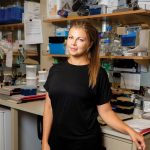 Aksinya Derevyanko: Finding strength in science, stage, and synapsesDerevyanko is a postdoctoral researcher training under Nicola Allen, PhD, a professor and neuroscientist at Salk.