







A look back at 25 years of discovery
The clock strikes midnight, ushering in the year 2000. Salk researchers enter a new millennium of science. What questions will they ask? What answers will they find? On this night, they can only begin to imagine.
With each paper our scientists publish, they keep a record of the edge of knowledge. What did humanity know on this day? What mysteries were still left to explain? What new discovery can we now articulate for the first time?
In this special issue of our Discoveries column, we’re cracking open the time capsule and revisiting three Salk studies from the year 2000. Let’s see just how far we’ve come in 25 years and what our scientists are hoping to learn next.
SCIENCE – FEB 2000
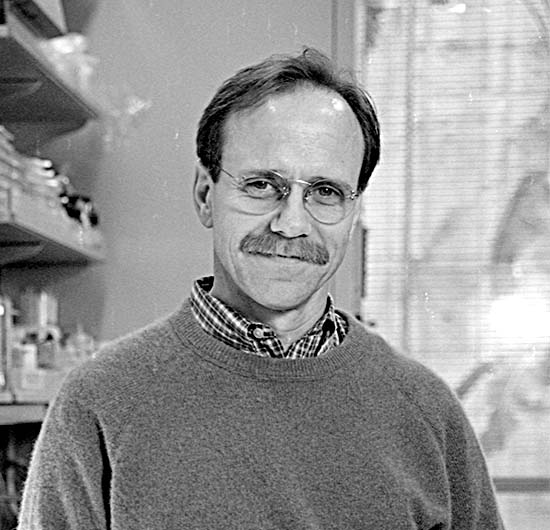
Assessing the potential of mammalian neural stem cells
Salk neuroscientist Rusty Gage, PhD, recently became the first to show that the human brain can produce new neurons well into adulthood, overturning a century of scientific dogma that viewed the adult brain as fully developed and incapable of regeneration. However, the exact location and function of these adult stem cells have yet to be identified, and the molecular mechanisms that regulate them are still poorly understood. Here, Gage reviews the current state of the field and the possible future applications of neural stem cells in transplantation and regenerative medicine. Before the full potential of neural stem cells can be realized, he says, scientists need to learn what controls their development and what types of brain cells they can become.
TODAY’S REFLECTION
Gage’s discovery of human adult neural stem cells was a landmark event in the history of neuroscience, forever changing how we think about the flexibility and regenerative power of the adult brain.
We’ve now learned where these stem cells are and what cells they can turn into. We’re also getting a clearer sense of how diet, exercise, stress, and disease can influence adult neurogenesis, and how this affects our learning, memory, and mental health.
As scientists gained a deeper understanding of how stem cells turn into brain cells, an exciting opportunity began to emerge in the lab. Using these new insights, Gage’s team developed methods to reprogram patient skin samples into various kinds of brain cells. Importantly, their methods were the first to produce neurons that maintain signs of a patient’s age. This allowed researchers to create and study cell models of the adult human brain, revealing tons of new information about the biology of brain health, aging, and disease.
These recent advances in stem cell biology are now enabling a new generation of neurotherapeutics, including improved strategies for stem cell transplantation and regeneration. Thanks to these decades of discovery, neural stem cells now hold significant promise for addressing neurological and neuropsychiatric disorders, including Alzheimer’s disease, Parkinson’s disease, amyotrophic lateral sclerosis (ALS), spinal cord injury, schizophrenia, and bipolar disorder.
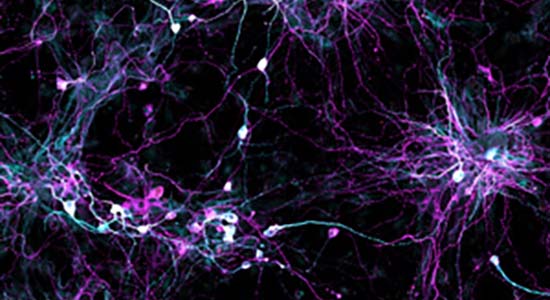
Gage’s lab developed a technique to directly convert skin cells from older patients into aged brain cells, shown here.
“The emergence of stem cell biology—the ability to shift the fate of cells from one lineage to another—has had a profound effect on our understanding of neurobiology and the development of novel therapies to treat neurological diseases.” –Rusty Gage
NATURE STRUCTURAL BIOLOGY – JUN 2000
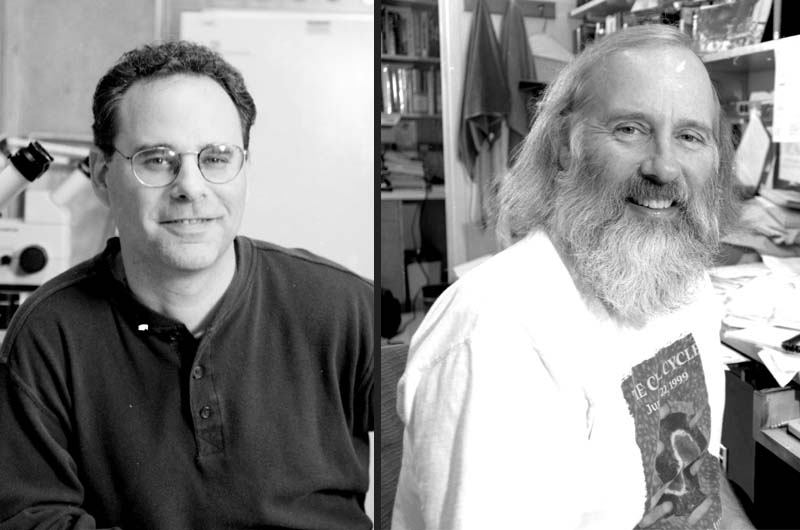
Cancer “survival” structure deciphered by Salk scientists
Cancer cells persevere against all odds, resisting death and continuing to grow, multiply, and invade the whole body. Salk scientists have now revealed the structure of a molecule responsible for cancer’s tenacity, appropriately named survivin. Using X-ray crystallography, Salk scientists Tony Hunter, PhD, and Joseph Noel, PhD, discovered the 3D structure of the survivin protein, pinpointing the critical regions on its surface that are hot spots for driving cell division. Their findings could now support the development of new drugs to block survivin’s cancer-promoting function.
TODAY’S REFLECTION
In the decades since Hunter and Noel first described survivin’s structure, their discovery has been cited in hundreds of cancer biology studies, and interest in the molecule has grown tremendously. Survivin has now been implicated in nearly all forms of cancer and contributes to many patients’ resistance to chemotherapy and radiation.
Several survivin inhibitors have shown promise over the years, especially when combined with other drugs or used to treat certain cancers like non-Hodgkin’s lymphoma. But most drugs have struggled to directly block survivin’s function, largely due to the molecule’s unique structure. Knowing its detailed structure has helped explain these clinical results and guided scientists in more promising directions. The latest drugs use different strategies to target survivin and are making great headway in ongoing clinical trials.
2025 also marks Hunter’s 50th anniversary at Salk. His discoveries have inspired hundreds of lifesaving cancer drugs, and his lab continues to characterize key cancer molecules that could serve as the basis for more precise and effective treatments.
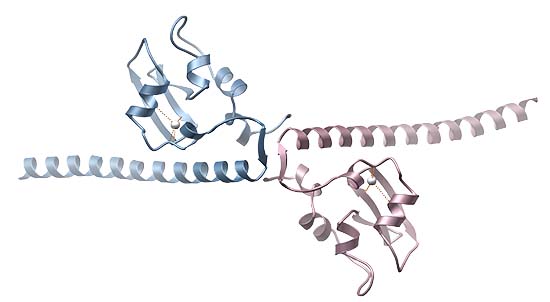
The ribbon structure of the human survivin protein, first described in 2000.
“Methods for deciphering protein structures have advanced dramatically since the year 2000, with cryo-electron microscopy and predictive modeling programs largely replacing conventional crystallography. It’s now much easier to learn the structure of a large protein or protein complex, which greatly facilitates the development of small-molecule drugs. Computer programs can now dock candidate drugs onto these 3D models and quickly identify those with the tightest fit, speeding up the process of cancer drug discovery.” -Tony Hunter
NATURE – DEC 2000
Move over, Human Genome Project; plant biologists complete the first plant genome sequence
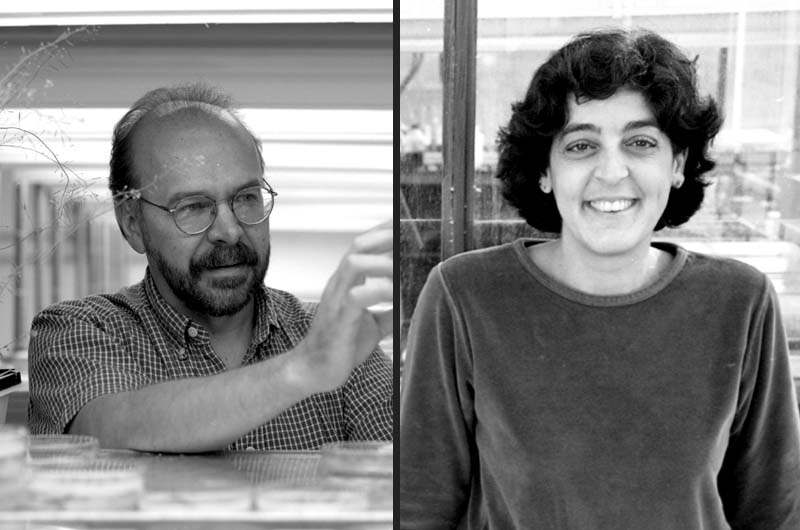
Arabidopsis thaliana, a small flowering mustard, has been the model research organism for plant biologists since the 1980s. Now, it’s become the first plant to have its entire genome sequenced. Salk scientist Joseph Ecker, PhD, co-led the international Arabidopsis Genome Initiative and contributed the sequence for one of the plant’s five chromosomes, while Joanne Chory, PhD, advised the national component of the project. The researchers are now part of a follow-up initiative aimed at deciphering the functions of the thousands of newly sequenced plant genes.
TODAY’S REFLECTION
It’s been 25 years since the first plant genome was sequenced, and the landmark paper has now been cited in over 10,000 subsequent plant biology studies.
After helping determine the DNA sequence of Arabidopsis, Ecker’s lab successfully mapped the locations of all the individual genes and created mutations in each one. Other plant biologists were then able to order these mutants over email and use them to decipher the function of each gene.
The genetic tools and resources generated by the Arabidopsis Genome Initiative and the studies that followed it have completely transformed the field of plant biology. They also laid the groundwork for Salk’s Harnessing Plants Initiative, which has now sequenced more than 900 additional plant genomes. Salk scientists are currently using this information to develop new varieties of wheat, rice, corn, and other staple crops with enhanced abilities to capture carbon, absorb nutrients, tolerate drought, and resist disease.
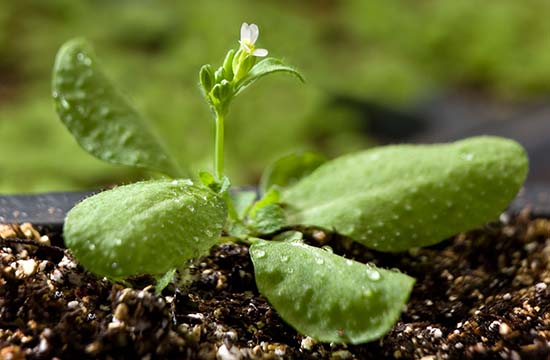
Sprouting Arabidopsis thaliana.
In just 25 years, we’ve gone from sequencing a single plant genome to thousands. This has provided incredible insights into plant development, growth, and immunity. And now, thanks to these foundational discoveries, we can develop plant-based technologies that will help stabilize our environment and support food security for generations to come.” -Joseph Ecker

Featured Stories
 The future starts upstreamFoundational discoveries are the source of tomorrow’s breakthroughs, but what happens if we let the river run dry?
 Diana Hargreaves: Follow the ScienceThe BAF complex is near and dear to Diana Hargreaves, PhD, a scientist, professor, and the J.W. Kieckhefer Foundation Chair at Salk. Hargreaves was born in Atlanta, Georgia, to a physician-scientist mother, so science had a hold on her from the very beginning.
 Ana Cabrera: Clearing the Path to DiscoveryCabrera is the senior director of strategic operations at Salk, a right-hand role to Chief Science Officer (CSO) Jan Karlseder, PhD. Cabrera and her colleagues in the CSO’s Office support Salk scientists through all of the logistical challenges that stand between them and their potential.
 Aksinya Derevyanko: Finding strength in science, stage, and synapsesDerevyanko is a postdoctoral researcher training under Nicola Allen, PhD, a professor and neuroscientist at Salk.