


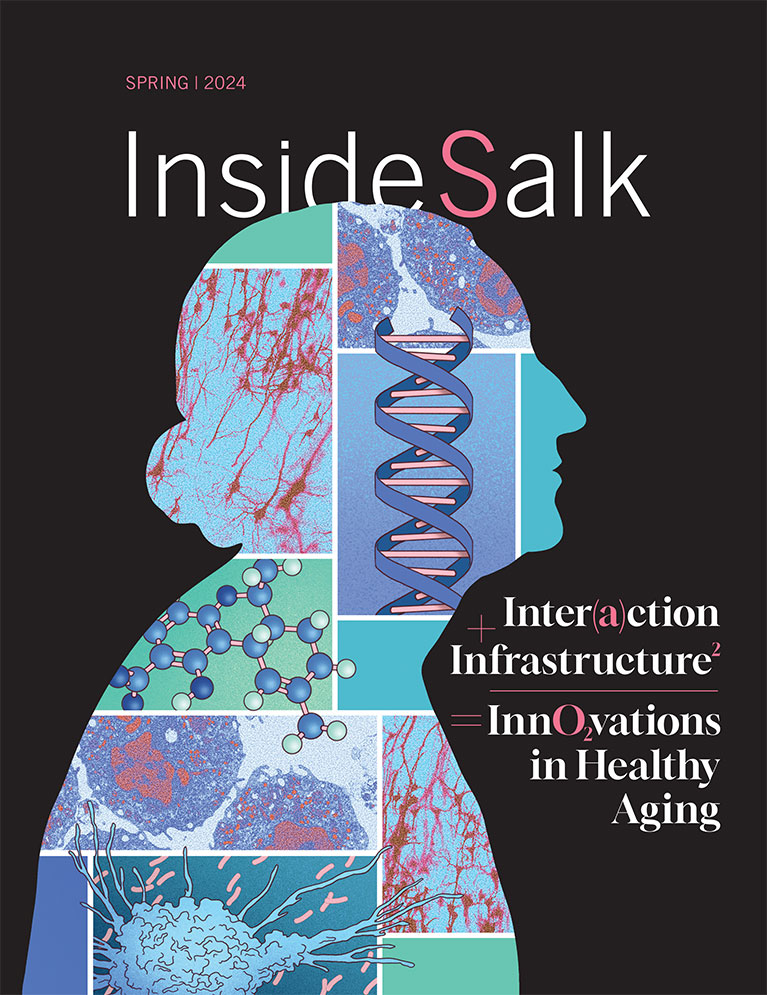




































Proteins sustain life as we know it, serving many important structural and functional roles throughout the body. However, these large molecules have cast a long shadow over a smaller subclass of proteins called microproteins. Lost in the 99 percent of our DNA that was previously disregarded as “noncoding,” microproteins have been hiding in these vast, dark stretches of unexplored genetic code. But despite being small and elusive, their impact may turn out to be just as big as that of larger proteins.
Salk scientist Alan Saghatelian, PhD, postdoctoral researcher Brendan Miller, PhD, and colleagues are now exploring the mysterious dark side of the genome in search of microproteins. Using their new AI tool called ShortStop, researchers can probe genetic databases and identify stretches of DNA that likely code for microproteins. Importantly, ShortStop also predicts which microproteins are most likely to be biologically relevant, saving time and money in the search for their role in health and disease. The Salk team has already used the tool to analyze a lung cancer dataset and found 210 entirely new microprotein candidates—with one validated standout—that could make good therapeutic targets in the future.