









Observations Diana Hargreaves Follow the science
Every cell in your body was built using the same genetic code, and yet you contain hundreds of different types of cells. How? Epigenetic regulation. Tiny molecules decorate your genetic code, signaling which genes should be expressed, and which genes should stay quiet. And unlike the genetic code it controls, epigenetic regulation is dynamic, enabling cells to change in response to their environment.
This intricate process is performed by proteins aptly named epigenetic regulators. One example is the BAF complex, a cluster of proteins that changes the shape of your DNA so that certain parts of your genetic code are easier to access and express.
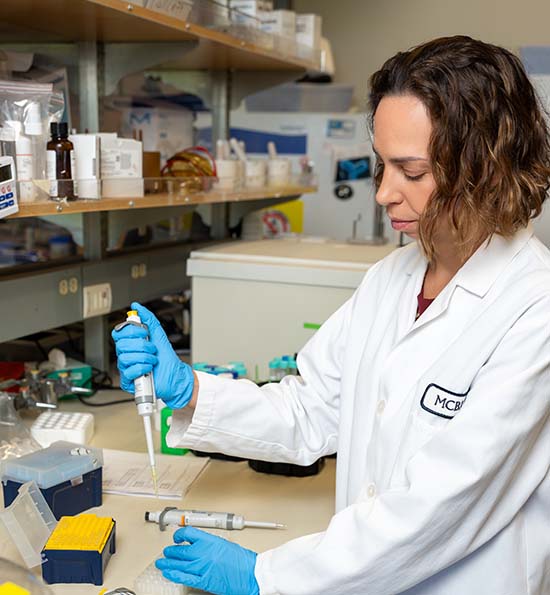
The BAF complex is near and dear to Diana Hargreaves, PhD, a scientist, professor, and the J.W. Kieckhefer Foundation Chair at Salk. Hargreaves was born in Atlanta, Georgia, to a physician-scientist mother, so science had a hold on her from the very beginning.
Today, Hargreaves’ trademark is her interdisciplinarity. By studying something as fundamental as the BAF complex, her research touches every disease and disorder imaginable. Most notably, the complex is frequently mutated in cancer and has been the target of many anti-cancer therapeutics.
While she didn’t start as a cancer biologist, Hargreaves has taken advantage of the Salk environment to collaborate with her cancer expert colleagues. Her latest project applies her findings to pancreatic cancer and earned her the All-Star Translational Award from the V Foundation for Cancer Research. She was also recently promoted to full professor at Salk, where she is now a member of the new NOMIS-funded Neuroimmunology Initiative.
Inside Salk sat down with Hargreaves to learn how her niche interest in BAF exploded into an interdisciplinary kaleidoscope of questions.
How did you first become interested in science?
DH: I was very fortunate to be raised in a family that values education. I had a great foundation in science because my mom was a physician-scientist, having done cancer research as a graduate student in Boston. After receiving her PhD, she earned an MD through an accelerated MD/PhD program—one of the first of its kind.
Despite that science foundation, I went to a very small college focused on undergraduate education. It was enough to get me excited about science, but I felt I needed to do research at a top-flight research institution to understand if being a scientist was for me. After college, I did a stint as a research technician at UC San Francisco in an immunology lab, and that was where I really became passionate about scientific research.
Did working in a smaller environment inform your later interest in Salk?
DH: Absolutely. I don’t know that it was conscious, but that smaller, liberal arts experience really shaped my idea of the ideal intellectual environment. Even for graduate school, I could have joined a large program, but instead I chose the Yale Immunobiology program, which had a small but stellar group of faculty. Salk has that same intimate environment, where strong collegial relationships facilitate collaboration. But here, your colleagues aren’t just other immunologists; they’re from all different fields.
What is it like being such a prolific collaborator at Salk?
DH: I enjoy collaborating, and epigenetics is something that touches every aspect of biology, every disease. Even within my lab, each trainee is working in their own system, using epigenetics as a lens to understand biology. That makes lab meetings really fun, because we begin to see similarities and common connections across very diverse systems.
What do you consider your current specialty?
DH: Molecular biologist is probably the best way to describe me. But I’ve taken a circuitous training path— immunology, then developmental biology, then cancer. I’ve worked in many different systems, but the thread that ties them all together is molecular biology.
Did being a developmental biologist influence your experience of having kids?
DH: Definitely. I marveled at the fact that the nine months of my pregnancy were a mere fraction of the time it took me to publish my postdoctoral work. Development is so efficient, and there are so many interesting changes happening to the body. Like, at some point during pregnancy, there’s this enzyme called relaxin that causes hip ligaments to loosen in preparation for birth. I remember trying to run one day, and I was like, “I don’t think my legs are connected!” It gave me a new appreciation for physiology.
How did you start studying epigenetics?
DH: My undergraduate mentor was trained as an immunologist, so she connected me to the immunology lab at UCSF. I learned a lot of interesting things in that lab, but I was especially drawn to epigenetics, which was a new area that was just taking off.
Epigenetics is looking at the language or code that lies on top of your DNA sequence. Unlike your DNA sequence, epigenetics can be modulated in each individual cell in response to stimuli, environment, aging—all sorts of things. We like to think about it as the control system that determines which parts of your DNA sequence are actually being used in any given cell.
I went to graduate school with the intention of studying epigenetics. That’s when I joined the lab of Ruslan Medzhitov, PhD, at Yale. He was studying molecular signaling in immune cells, which, as sentinels of the body, have to be able to respond quickly and appropriately to pathogens. It turns out that the expression of immune mediators is tightly controlled by epigenetics, which became the basis for my thesis work.
How did you become an expert on the BAF complex?
DH: In graduate school, I was studying how cytokine genes are turned on in response to pathogens. Toward the end of my time there, I uncovered one layer of this epigenetic regulation, which is the BAF complex. It was sort of tangential to what I was investigating, but it was really interesting and understudied, so I decided to take a deep dive.
I started my postdoctoral research with Gerald Crabtree, MD, at Stanford University. He was one of the first to identify BAF complex components and delete these genes in mice. He was taking a developmental biology approach to show that the BAF complex is required for lineage specification—how a stem cell figures out what kind of cell it’s going to become.
Meanwhile, others had discovered how to culture embryonic stem cells in a dish to study the determinants of pluripotency—the ability for one cell to have many possible identities and functional fates. Our question then became, if epigenetics is what determines cell type-specific gene expression, how does a cell that can give rise to any cell type behave on the epigenetic level?
But during this time, the advent of next-generation sequencing allowed cancer researchers to identify mutations in cancer genes in patients. And this realization fell into our laps: The BAF complex is mutated in cancer. And not just a little bit, but a lot. Suddenly, what was once a niche interest of mine became very exciting to many, many cancer biologists. That discovery has inspired me to do a lot of work in cancer since.
“Some things are too incredible to ignore, so you go where the science and data lead you.”
–Diana Hargreaves
So, really, cancer biology came to you.
DH: Yes, exactly. I was not a cancer biologist. But some things are too incredible to ignore, so you go where the science and data lead you. And being at Salk has really helped me do this work. I have support from my colleagues to make sure we are studying BAF mutations in cancer in the most creative and rigorous ways. I’ve been enabled to take risks and explore new connections to BAF in that way.
With our recent V Foundation project looking at pancreatic cancer, I’ve been able to lean on Reuben Shaw, PhD, Tony Hunter, PhD, Dannielle Engle, PhD, and Christina Towers, PhD. They have provided advice, training, and reagents for me and my team. It’s really an incredible environment, and it allows us to ask the most important questions that will open opportunities to create new treatments for pancreatic cancer.
What are you working on now?
DH: A major focus of my lab is how cancers caused by BAF mutations respond to immunotherapy. On the flip side, we are examining the epigenetics of immune cells in the cancer microenvironment and how they change their function in response to tumor signals.
Clinical trials of BAF mutant cancers are ramping up, and we’ve been fortunate to work with Gregory Botta, MD, PhD, at UC San Diego on the V Foundation project, who has found that patients with BAF mutant pancreatic cancer are more responsive to immunotherapy. Pancreatic cancer has extremely high mortality rates, so it’s important to explore why this might be happening and how to optimize treatment for these patients.
Meanwhile, BAF inhibitors are entering early clinical trials and could be efficacious as targeted therapies for cancer. But we know BAF inhibitors aren’t going to act just on the cancer cells—they’re also going to affect immune cells within the tumor microenvironment. If we want to develop the safest and most effective cancer drugs, we need to understand how blocking BAF epigenetic regulation will affect the immune system. That’s where our V Foundation project comes in—we’re pairing human clinical trials with our studies of BAF complex inhibitors in mouse models of cancer. It seems like these drugs will be beneficial for both targeting the tumor and igniting immune cell function, and that’s been exciting and unexpected.
What is your life like outside of the lab?
DH: I spend a lot of time being active with my kids, which is great in San Diego; there’s a wonderful outdoor culture here. I do a lot of gardening. I was laughing with my husband because, if you go on Google Maps and look at our house, the picture has the garage door open. That’s the way we live, with our kids constantly running around outside.
Did you think you’d end up switching coasts?
DH: My parents always encouraged us to leave the nest and follow our passions. My career in science has taken me all over the United States—Philadelphia, San Francisco, New Haven, Baltimore, and now, San Diego. Thankfully, I landed in a pretty awesome spot, both for work and family. I’m tremendously grateful for the community at Salk and around San Diego.

Featured Stories
 The future starts upstreamFoundational discoveries are the source of tomorrow’s breakthroughs, but what happens if we let the river run dry?
 Diana Hargreaves: Follow the ScienceThe BAF complex is near and dear to Diana Hargreaves, PhD, a scientist, professor, and the J.W. Kieckhefer Foundation Chair at Salk. Hargreaves was born in Atlanta, Georgia, to a physician-scientist mother, so science had a hold on her from the very beginning.
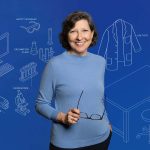 Ana Cabrera: Clearing the Path to DiscoveryCabrera is the senior director of strategic operations at Salk, a right-hand role to Chief Science Officer (CSO) Jan Karlseder, PhD. Cabrera and her colleagues in the CSO’s Office support Salk scientists through all of the logistical challenges that stand between them and their potential.
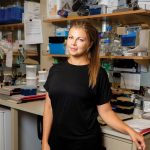 Aksinya Derevyanko: Finding strength in science, stage, and synapsesDerevyanko is a postdoctoral researcher training under Nicola Allen, PhD, a professor and neuroscientist at Salk.