View flipbook
  Download current issue
  Archives
 Salk Institute
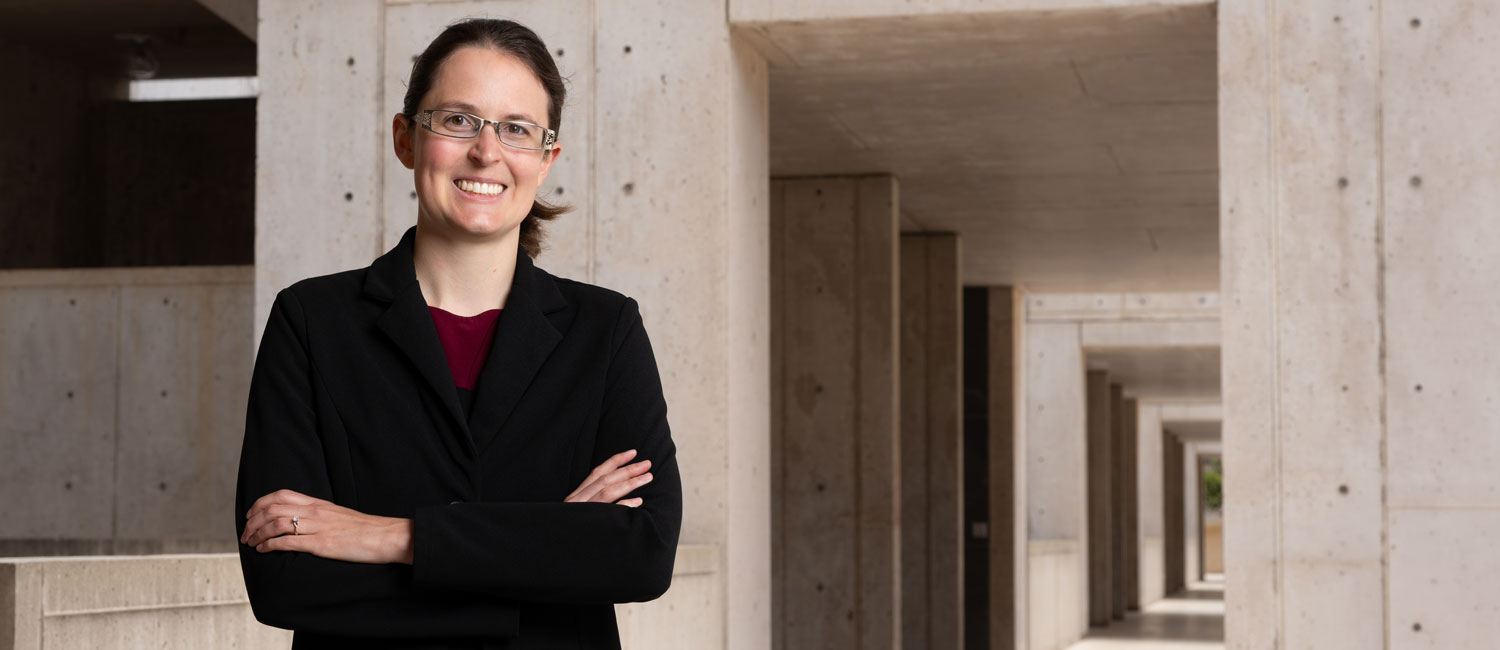
 Blum talks about research, which asks how the body tolerates the things we eat and why that sometimes goes wrong.
Jamie Blum, PhD, has always been curious about what we eat and why it matters. Now, as a Salk assistant professor, she’s asking the question at the molecular level, and the answers could one day change how we think about food allergies.
Growing up in rural upstate New York, Jamie Blum wasn’t thinking about immunology. She was mostly thinking about snacks—specifically, the ones she wasn’t allowed to have. Her parents kept a strict household when it came to food: no high-fructose corn syrup, no hydrogenated oils. While her friends got the fun stuff, Blum got curious. Why did those ingredients matter? What were they actually doing inside the body?
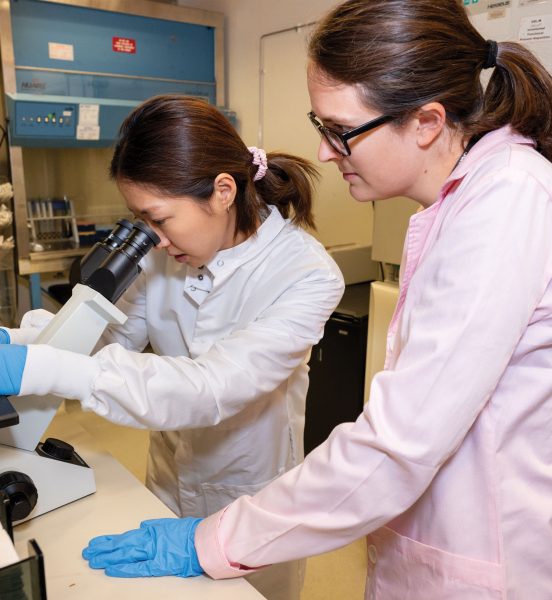
That early question, as it turns out, set the course for her career. Today, Blum runs a lab at the Salk Institute that sits squarely at the intersection of nutrition, plant biology, and immunology. She joined Salk in the fall of 2025, drawn by the Institute’s collaborative culture and its rare willingness to support foundational, open-ended science that most research institutions overlook. After all, before the right treatments can exist, someone must ask the right questions.
How did you wind up here, as a scientist at Salk?
JB: It has been a winding road, which I think is actuallywhat makes the work interesting. I did my undergraduate degree at Cornell and then stayed there for my PhD in molecular nutrition, where I was studying how nutrients affect muscle stem cells. Then I went to Stanford for my postdoc, working in a chemical engineering lab focused on how the immune system reacts to food proteins. That combination—nutrition, plant chemistry, immunology—is a little unusual, but it maps almost perfectly onto what I’m doing now.
What drew me to Salk specifically was the interdisciplinary environment. My research touches plant biology, metabolism, and immunology all at once, and Salk has real depth in all three of those areas. It’s also genuinely collaborative. That’s rarer than it sounds.
Your lab focuses on food allergies. Can you explain what’s actually happening in the body when someone develops one?
JB: Your immune system is constantly making decisions. It screens everything entering your body and asks: Is this safe, or is it a threat? That process happens most intensely in the intestine, because most of us are eating three to five pounds of food every day. There’s always a chance something harmful is in there, so the immune system has to stay vigilant.
When things go well, the immune system recognizes food proteins as safe and mounts what we call a regulatory response—essentially, it stands down. When things go wrong, it decides those proteins are dangerous and launches an immune attack. That’s a food allergy. What we don’t fully understand yet is exactly what tips the scales one way or the other. That’s the question we’re trying to answer.
What’s the current scientific thinking on how food allergies develop, and what advice do you give to parents who ask you about it?
JB: The field has actually gone through a major shift on this. For years, the clinical guidance was that parents should avoid giving young children major allergens, like peanuts and tree nuts, until they were around three years old. The idea was that an infant’s immune system wasn’t ready. We now know that was exactly backwards.
The earlier a baby is exposed to an allergen, the less likely they are to develop an allergy to it. So my advice to any parent who’s worried: Once your baby starts eating solid foods, that’s the time to start introducing those foods. Early and often, not avoided.
“My research touches plant biology, metabolism, and immunology all at once, and Salk has real depth in all three of those areas. It’s also genuinely collaborative. That’s rarer than it sounds.”
Jamie Blum
So what’s missing from our understanding? What is your lab actually trying to figure out?
JB: We know that the proteins in food are what the immune system directly recognizes. But we think proteins alone aren’t enough to drive a full allergic response. There seem to be other molecules—what we’re calling adjuvant molecules—that act as a kind of amplifier or trigger alongside the proteins. We’re trying to identify what those molecules are and how they work.
A lot of those molecules likely come from plants. I did my postdoc in a plant chemistry lab, so I’ve spent a lot of time thinking about the compounds plants produce and what they do once they’re inside us. That’s a big part of what makes our approach at Salk distinctive—we’re bringing plant biology into a question that most immunology labs wouldn’t think to look at from that angle.
You mentioned that diet has emerged as a predictor of health more broadly. What don’t we know yet about the connection between what we eat and conditions like Alzheimer’s disease?
JB: We have pretty good evidence that certain dietary patterns, a Mediterranean diet, for example, are associated with lower levels of systemic inflammation and some protection against chronic diseases, including Alzheimer’s. But “associated with” is not the same as “we understand why.”
The honest answer is that we don’t yet have a clear, mechanistic explanation for how specific foods or molecules in those diets produce those protective effects. That’s exactly the kind of foundational question that needs to be answered before anyone can develop a targeted intervention. You can’t engineer a solution to a problem you haven’t mapped yet.
What are you most excited to learn in the next five to 10 years?
JB: Within my own lab, I’m hoping we can build a fairly complete picture of what those adjuvant molecules from food actually are and start to understand the rules governing when the immune system decides to tolerate something versus react to it.
More broadly, I’m excited about the possibility of connecting specific molecules in our diet to specific changes in the body—a particular immune cell responding to a particular compound, for instance. As the tools for large-scale biological data analysis get better, those kinds of precise relationships are becoming possible to see for the first time. We’re at a moment where the questions people have been asking for decades are finally answerable.
That’s a remarkable situation to be doing science.